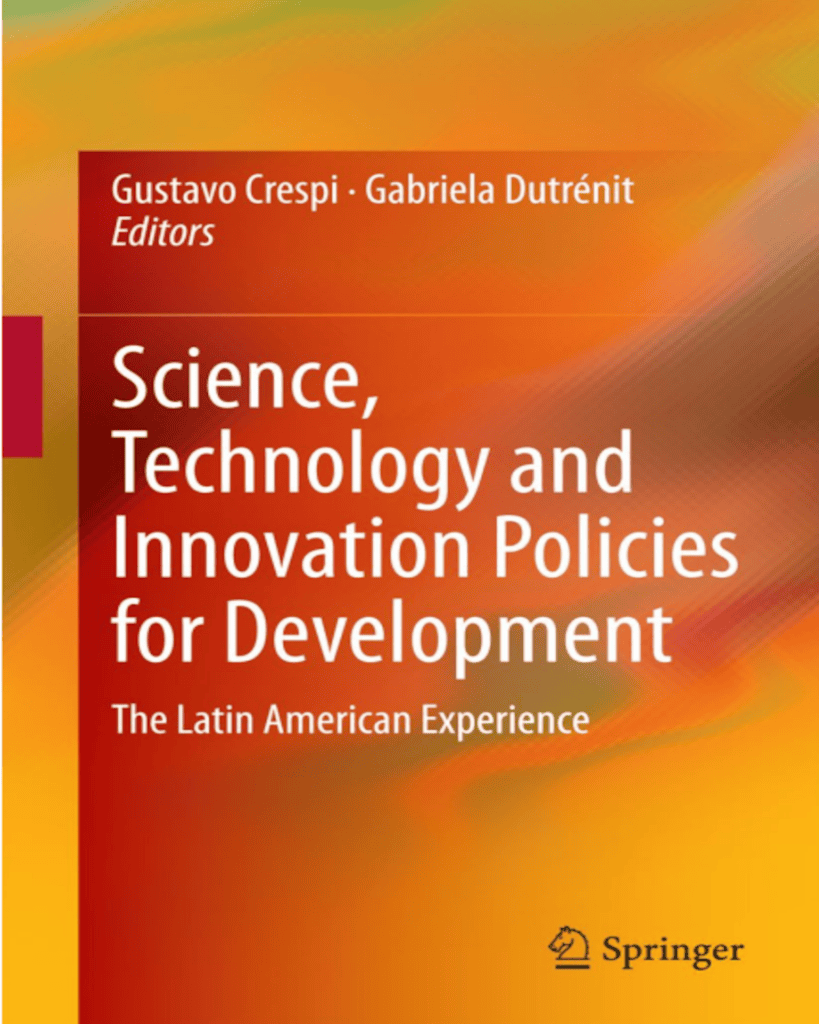
Science, Technology and Innovation Policies for Development: The Latin American Experience provides a comprehensive examination of how science, technology and innovation (STI) policies have evolved across Latin America and how they contribute to economic development, productivity growth and the strengthening of national innovation systems. Edited by Gustavo Crespi and Gabriela Dutrénit, the volume brings together leading experts to analyse policy experiences from eight Latin American countries, offering one of the most extensive comparative assessments of STI policy in the region.
The book starts from the recognition that innovation is a key driver of long-term development, yet many Latin American countries continue to face structural barriers that limit their innovation performance. While the region has achieved greater macroeconomic stability and increased investment in science and technology, significant challenges remain in improving productivity, strengthening institutional coordination and promoting effective interactions among firms, universities, research organisations and governments.
Through detailed country studies—including Argentina, Chile, Costa Rica, El Salvador, Mexico, Peru and Uruguay—the contributors examine how different policy frameworks have emerged in response to national priorities and institutional contexts. Rather than presenting a single model of success, the volume highlights the diversity of policy approaches across the region and the importance of designing strategies that reflect each country’s capabilities, productive structure and development objectives.
A central contribution of the book is its emphasis on learning from experience. The comparative perspective allows readers to identify common patterns, successful initiatives and persistent challenges in STI policy design and implementation. Topics explored include institutional reform, policy coordination, public support for business innovation, fiscal incentives, technology modernisation programmes and mechanisms to strengthen collaboration between the public and private sectors. The book also discusses how governments can address both market failures and systemic coordination failures that constrain innovation and technological upgrading.
The volume places particular emphasis on the role of innovation systems in fostering inclusive and sustainable development. It argues that effective STI policies should not only stimulate research and technological advancement but also strengthen domestic capabilities, encourage knowledge diffusion and support structural transformation. Innovation is presented as a collective process that depends on institutions, networks and long-term investments in human capital and organisational learning.
Combining rigorous analysis with practical policy insights, Science, Technology and Innovation Policies for Development has become a key reference for scholars, policymakers and development practitioners interested in innovation policy in Latin America. Its lessons remain highly relevant for countries seeking to design more effective innovation systems capable of supporting inclusive growth, technological upgrading and sustainable development in an increasingly knowledge-based global economy.